
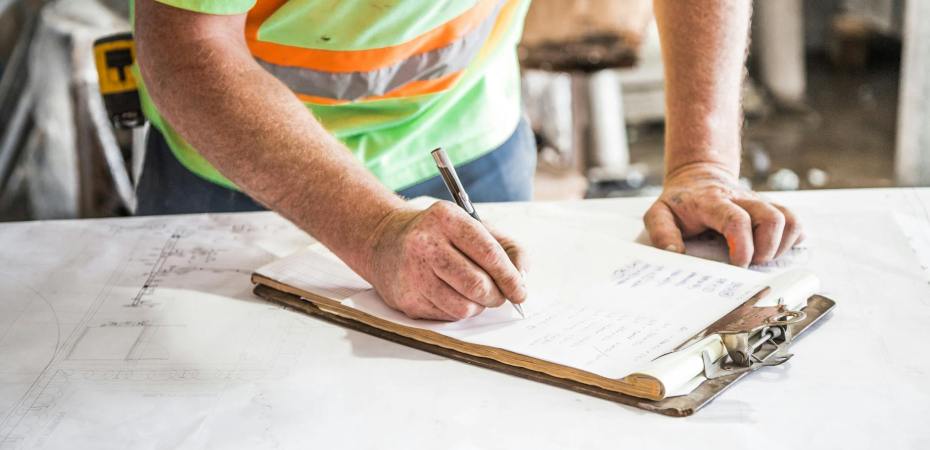
Project management can be defined as the structured process of “applying knowledge, skills, tools, and techniques to plan, execute, and control tasks to achieve specific goals within a set budget and timeframe.” As a Construction Project Manager, I spend my days studying the scope, deliverables, risks, and communication necessary to do one thing: keep a promise. A promise to the homeowner who invested heavily in making their home safer or more enjoyable for a family, a promise to the sales representative who pored over designing a contract for that project, and a promise to the incredible labor force who will safely bring that contract to life during installation.
At the end of the day, Project Management is about stewarding resources that keep a promise.
Earlier this year, I was asked what I believe is a factor for success in effective Project Management. No pun intended, but I’m going to level with you, this was hard to answer. While I have been heavily involved in project management throughout my career, transitioning to the construction industry a little over four years ago was intimidating. Sometimes it still is! It is fast-paced. It is hard. It is demanding. It is evolving. It requires just as much art as it does science and skill.
The longer I think about this question, the more humble I feel. I work with incredibly talented people who will forget more than I will ever know, and I manage projects that require me to constantly increase my knowledge and skill. In my opinion, it is this position of humility where a project manager thrives.
Construction Leadership
Construction itself can be dirty and loud. Project management must be disciplined and decisive. (No pressure, don’t mind me while I breathe into this paper bag.)
The project manager is responsible for everything and yet most often doesn’t turn a screw. The project manager must be an expert in every inch of the scope of work all while leading experts of their particular trade.
The only way to lead through this paradox is humility. There is no competition, only partnership: ask questions without insecurity, listen before directing, know when to step back and let craftsmanship lead.
An effective project manager will multiply their leadership by honoring the knowledge of others.
Holding Other People’s Money with Integrity
The only projects I get to work on are the ones that get contracted. Someone has invested their hard-earned money into buying materials and securing labor for work on their home or business. This money is not the project manager’s, and that is critical to remember.
If you are not instantly humbled at the prospect of stewarding the life savings of a family or the investment capital of a growing company, stop reading right now. Projects are someone else’s sacrifice not a spreadsheet to manage.
To be a humble project manager, consider treating your timelines and budgets as sacred, not flexible. With an owner’s mindset, you’ll understand that every milestone has a real cost to real people.
Project managers are not simply managing costs; they are guarding trust.
Working on What Matters Most
The majority of my work is residential and carries with it a lot of emotion. On more than one occasion, I have closed a project where someone cried tears of joy because a new window or door represented their kept promise to a spouse who passed on. On the other end of the spectrum, I have led projects where tempers flare from the moment we walk through the door.
What a project manager needs to understand is that a home, or even a business, can represent safety and identity to customers. It’s where their children play, where memories are being made, where they invested everything to start a family business.
Remember that this project is not just another job. Pay attention to the emotional state of your customer and slow down when anxiety or stress show up. You are a problem solver, take complaints personally, not defensively.
After family, there may be nothing people care about more than their home.
Mistakes & Failures: Ownership without Excuse
If you currently have a pulse – go ahead and check – you will make mistakes. Construction is complex and things will go wrong. My keyboard has a backspace for mistakes, but no such button exists when you shatter a giant piece of glass that someone waited months to have installed. (Yes, that really happened.)
In my experience, humility has been the single greatest factor in keeping a project moving forward by owning errors quickly and communicating the plan early.
No over-promising. No blame shifting. No keeping a customer in the dark. No defensiveness. Read that again: no defensiveness.
Credibility is built faster by honesty and a competent plan than by flawless performance.
Being the Buffer Between Chaos and Calm
There is a point where the method and science of project management will take a back seat to art and discernment. Think about it: the project manager sits between trades and customers, schedules and reality, expectations and constraints.
If you want the privilege of this role, project managers absorb the stress of these moments so others don’t have to. An excellent project manager will use these moments of potential chaos as an opportunity to protect the long-term trust over a short-term win.
Emotional intelligence and situational awareness are core strengths of the humble project manager.
Humility is a Force Multiplier for Leadership
There are days when I envy the technical skills of the men and women I work with. I long for days when everything goes perfectly, and no change orders are required.
But you know what I will never trade for those things? Influence and an opportunity to serve people.
If picking up the phone at odd hours is what is required to build trust and loyalty with customers and crews, a humble project manager will do it.
If showing up a day earlier to walk the job site with a customer is what they need for psychological safety, a humble project manager will do it.
There is no greater force multiplier for leadership and respect than humility. Not weakness, humility. Stewards who care about people and excellence.
Strong project managers are reliable, grounded, and humble.
What’s in Your Toolbox
I have so much to learn about the industry I work in. Materials, techniques, labor laws, installation ordinances, and regulations. If you haven’t already picked up on it, let me emphasize what I believe makes for an excellent project manager, even beyond those critical things.
Homes will age and break. Reputations last forever. When you lead with humble confidence and carry your responsibility with reverence, humility will be your competitive advantage.
Humility may be the strongest tool a project manager carries.
 Dom Robin